Why Slovenia's Country Roads Might Be Europe's Best Gravel Playground
Alpine forest in the morning, limestone and prosciutto by Thursday. What Slovenian gravel actually feels like — and why linking two valleys nobody thought to link is the best day you'll have here.

You leave a village on tarmac. Two kilometres later the houses run out and the road turns white — still a road, still graded, just no longer paved. It climbs through spruce for forty minutes with nothing on it. At the top there’s a mountain pasture, a wooden hut, cows. Then the road drops into the next valley and you’re on asphalt again, in a different place, having crossed something.
That’s a Slovenian gravel day. Nobody designed it. You just linked two valleys that were already connected.
It is gravel — just not the kind you’re used to
The Slovenian word is makadam, and it’s worth explaining because riders arrive expecting something else.
This is not a graded American gravel road running dead straight for twenty miles, and it’s not a rocky forest trail. It’s compacted crushed limestone, drained and maintained well enough to carry a logging truck. White, firm, and quick when it’s dry. Light rain binds the dust and makes it grip better. A fresh grading makes it loose for a few weeks; an active harvest churns it. A road can be perfect and the next valley over can be a mess.
Around 12,000 kilometres of it exists, mostly built to move timber and reach hayfields. All of it is legally open to you.
The surface never stays the same for long
This is the part that surprises people, and it’s most of the character.
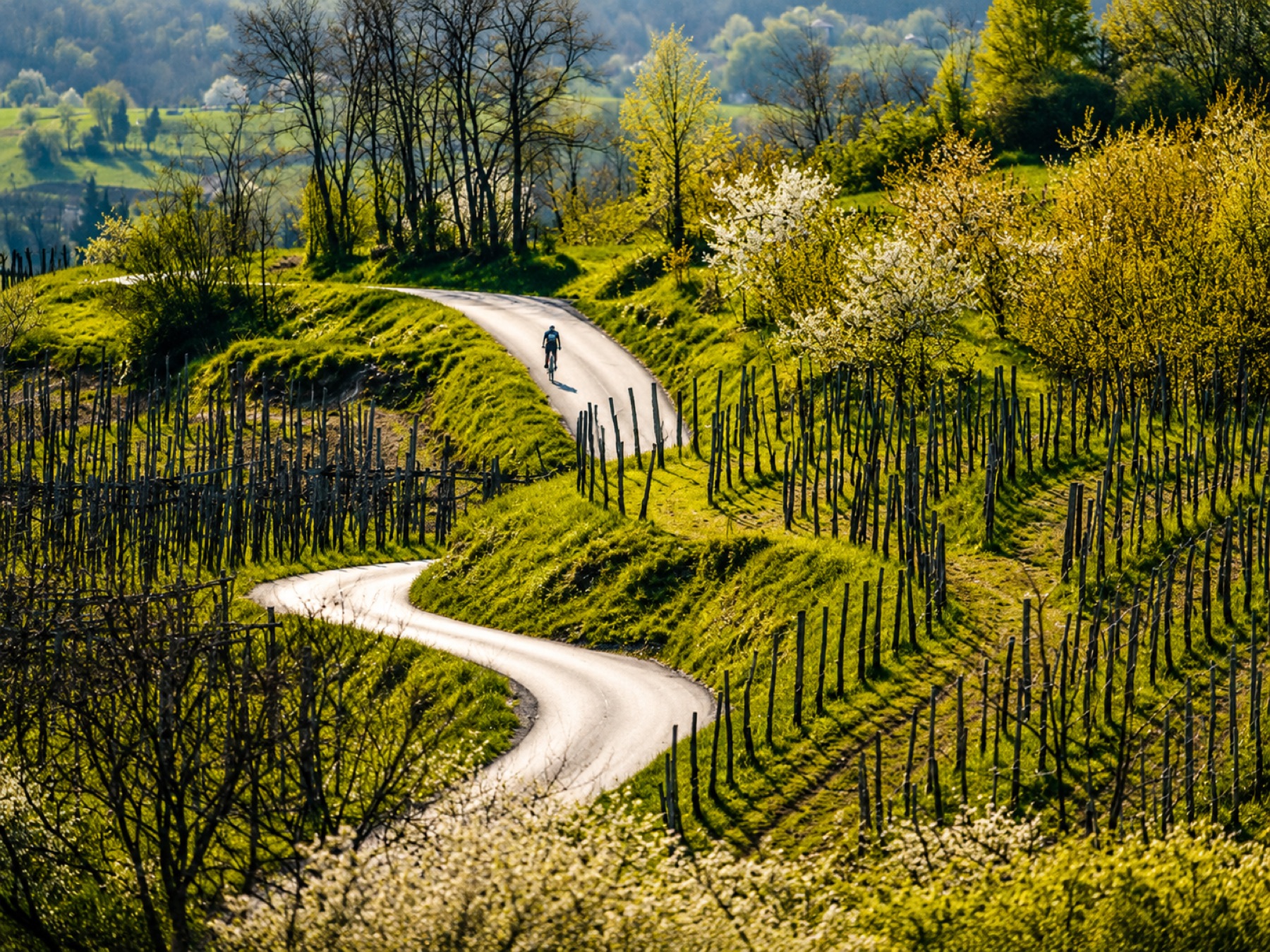
You don’t ride an hour of gravel then an hour of tarmac. You ride four kilometres of smooth white makadam, then a stretch of farm track with grass down the middle, then a hundred metres of rough where the tractors turn, then paved country road through a village, then back onto forest road for the climb. In a single afternoon.
Riders coming from destinations where the surface is uniform find this either irritating or the best thing about the place. Almost nobody is neutral about it.
Three regions, three different countries
Slovenia is small enough that you can ride all three in one week without repacking properly.
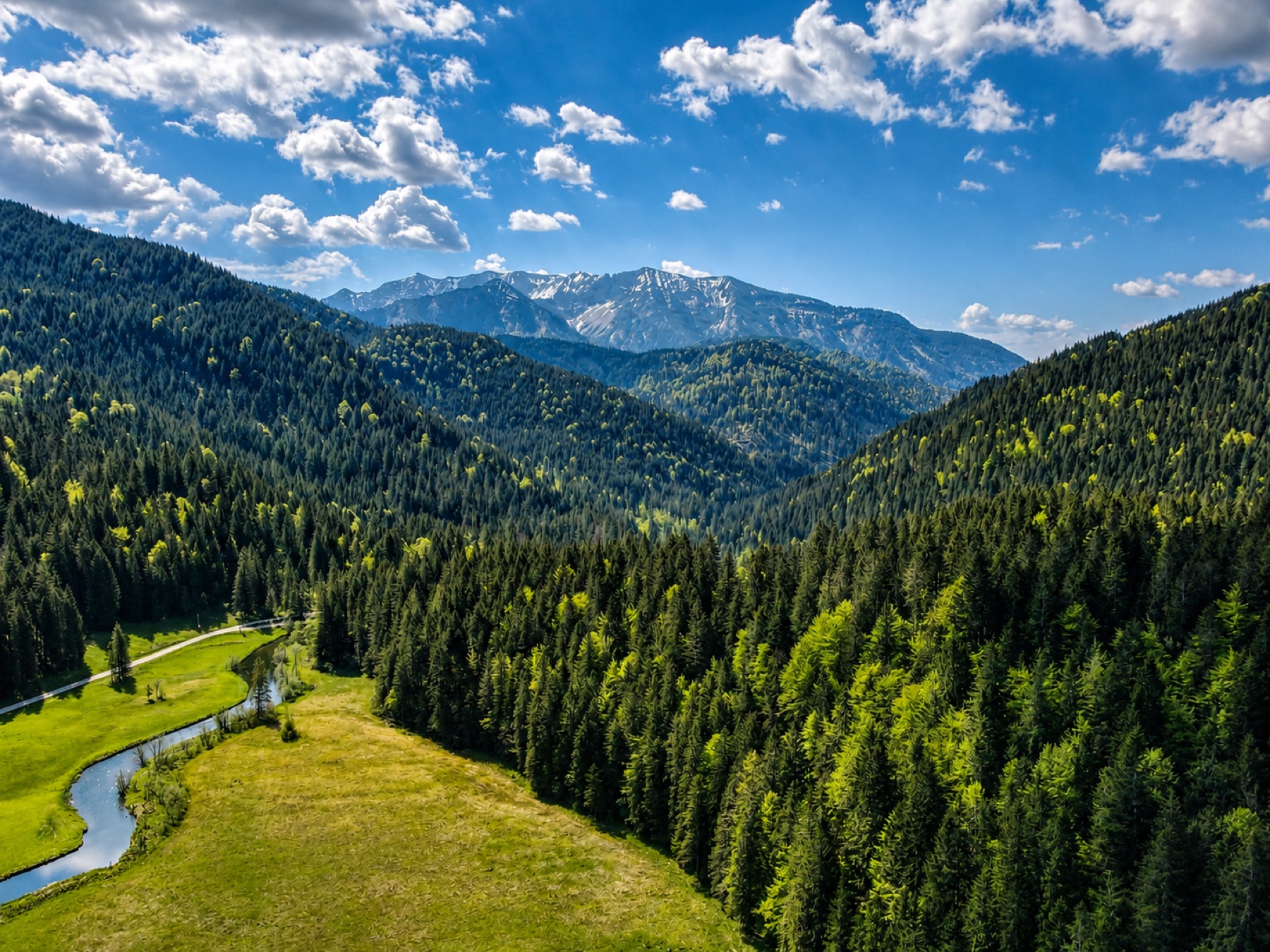
The alpine plateaus — Jelovica, Pokljuka. Long climbs onto the top, then rolling makadam through spruce forest, mountain pastures opening up, the Julian Alps showing through the trees. Cold in the morning even in August. The descents come out at ironworking villages in the valleys below.
Kras. The limestone plateau behind the Adriatic, and a different country entirely. Red soil, low stone walls, vines in rows on the terraces, the light coming off the sea. This is pršut and teran country — the ride ends somewhere with a plate of prosciutto and a glass of something dark, and that isn’t a detour from the day, it’s the reason for the route. Rideable in March and November, when the alpine plateaus are under snow.
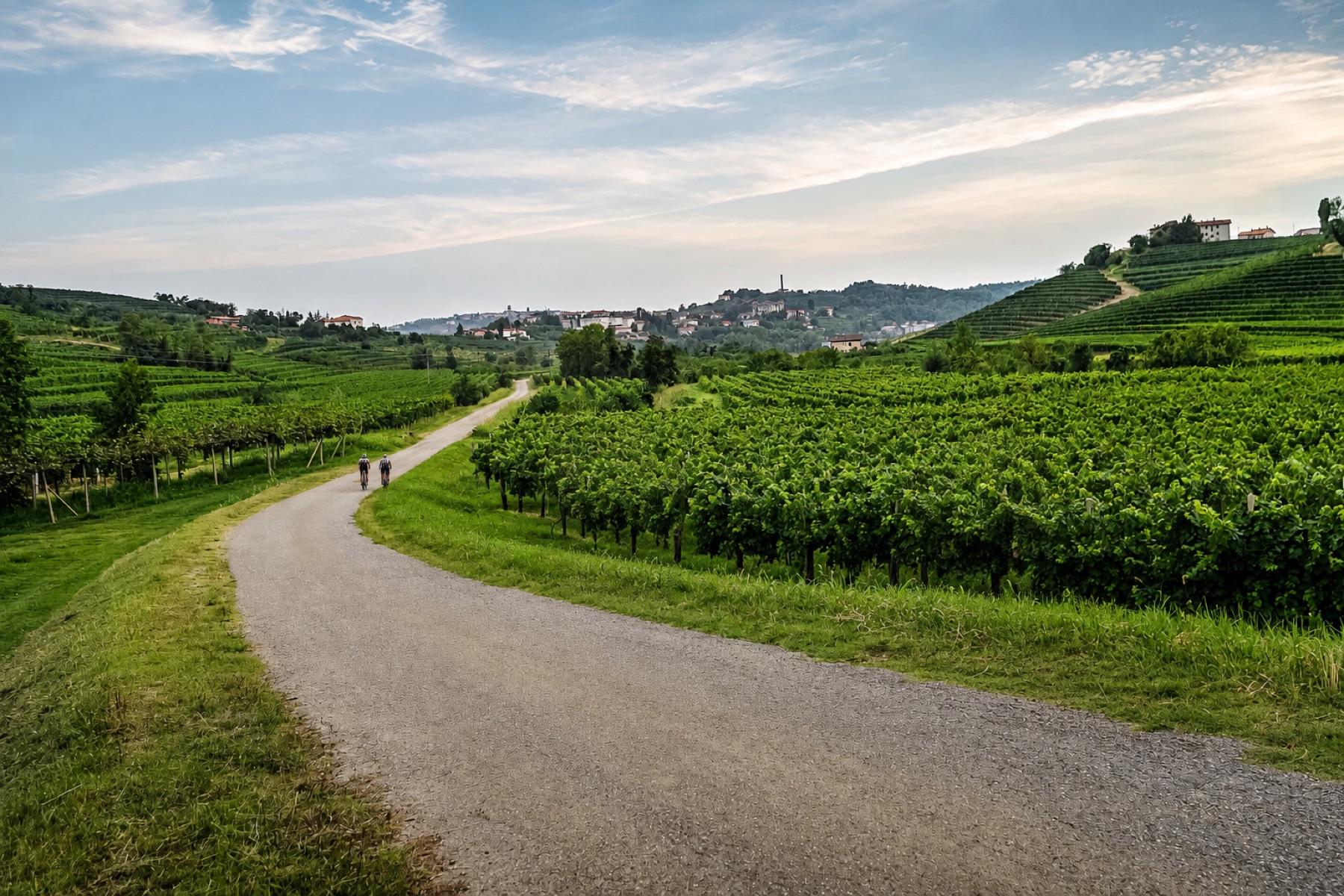
Vipava. Country roads through vineyards, farm tracks between the rows, and the burja — the wind that comes down off the plateau hard enough to change your plans. You ride past people working, which sounds like nothing until you’ve spent a week in a destination where you don’t. Someone will wave you into a cellar eventually. Go.
What actually makes it hard
Not the surface, and not the climbing.
Back roads branch constantly and they’re mostly unsigned. A GPX line that looks obvious on a screen puts you at a junction in thick forest with four identical options, and the wrong one costs you an hour and three hundred metres. There are long stretches with no village, no shop and no useful phone signal.
This is where a local stops being a luxury. Not for the route — you can download a route. For knowing which of those four turnings had trees felled across it last week.
Why it feels like exploring
Because nobody arranged it for you.
There’s no signed circuit, no difficulty rating, no visitor centre selling a map of the six best loops. Whether a road is good is something somebody had to find out by riding it. Manufactured gravel returns you to the car park. This is an old working network you happen to be allowed to use, and the best days on it are the ones where you link two things nobody thought to link.
Building a Slovenia trip for your clients? Here’s how we work with tour operators →