Five From the Door: Why Žirovnica Works as a Gravel Base
The Karavanke rise behind the house. The Julian Alps sit across the valley. Country roads disappear into both. Five days, five different rides, one front door.

The best thing about a good cycling base isn’t that you stay in one place.
It’s that every morning you leave the same front door and end up somewhere completely different.
In Žirovnica the Karavanke rise behind the house, the Julian Alps sit across the valley, and country roads disappear into both. Ride north today. Cross the valley tomorrow. Go long when the legs are good.
Five days. No repeated rides. No van required.
Where it sits
Žirovnica is a string of villages along the sunny side of the Sava valley, five kilometres from Bled — close enough to ride there on gravel before breakfast, far enough that you never sleep in the crowds.
| Bled | 5 km — and you can ride it on gravel the whole way |
| Radovljica | 6 km |
| Kranjska Gora | 22 km |
| Bohinj | 25 km |
| Ljubljana Airport | 39 km · ~30 min |
Two mountain ranges, one on each side of the valley. The Karavanke directly behind the villages; Jelovica and Pokljuka across the water. Different forest, different rock, different weather — and quiet country roads onto both without a transfer.
Twenty-two kilometres to Kranjska Gora puts the high alpine passes inside a comfortable day, which most gravel bases can’t claim.
Five gravel days
Day 1 · Završnica and Valvasor’s
~50 km · ~1,200 m · country roads and forest road
The home loop, fifteen minutes from breakfast. Up the Završnica valley past the reservoir, then climbing through Potoška planina and planina Stamare to Valvasorjev dom under Stol — the highest peak in the Karavanke — with Zabreška planina below.
The right first day. Enough climbing to open the legs, close enough to turn around if the group is more travelled than it admitted. There’s a new bistro down at Završnica by the river for after.
Day 2 · The Radovna valley
~70 km · ~1,000 m · mostly tarmac with gravel sections
Across the valley, past Bled, and up into Radovna — a long high valley between the Pokljuka and Mežakla plateaus, running out toward Mojstrana.
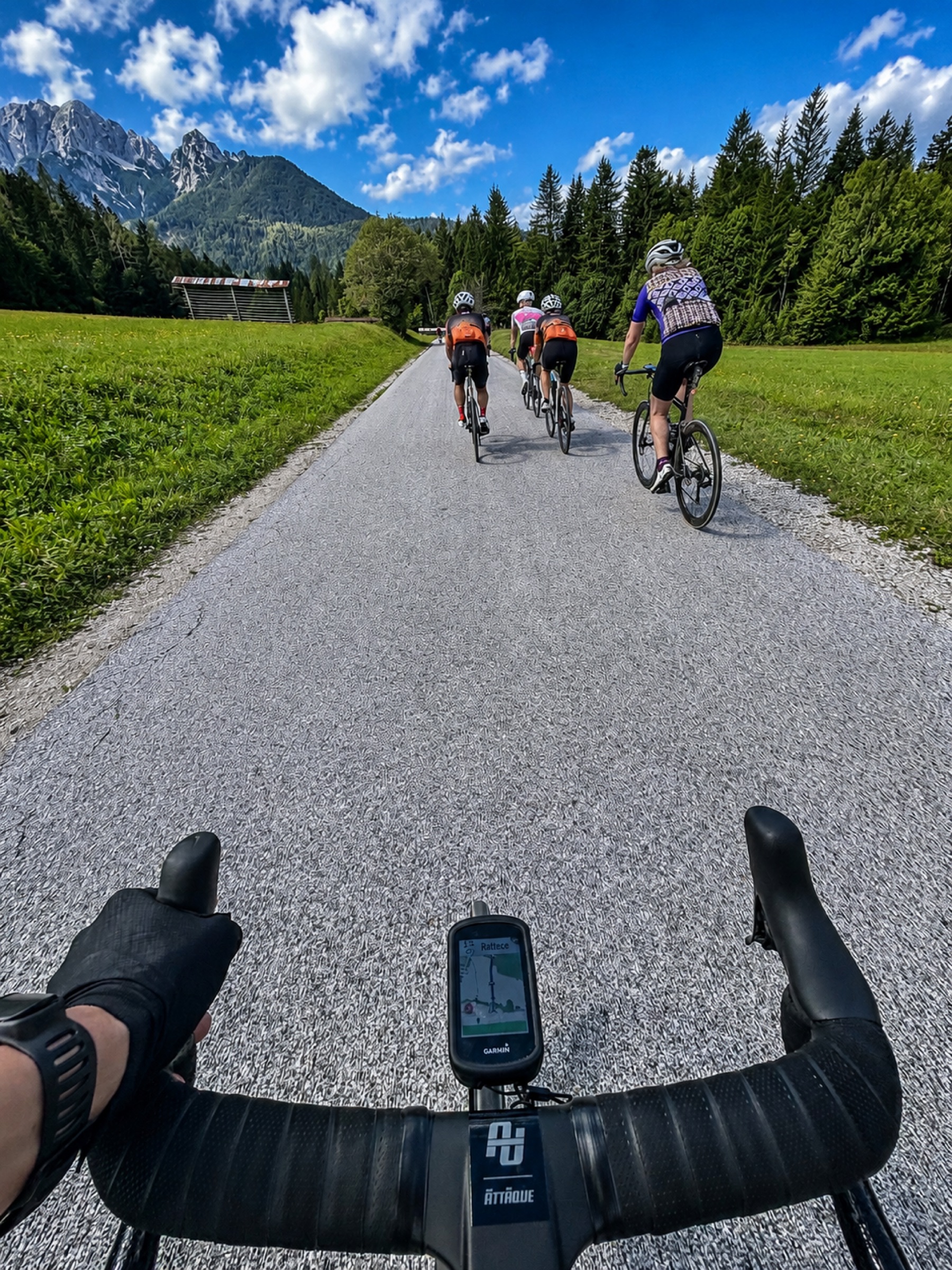
This is the way into the high Julian Alps. If you were climbing Triglav, Slovenia’s highest mountain and the thing on the national flag, you’d start from here. Riders mostly don’t know that and it changes how the valley feels once you do.
Mostly paved, some of it on a dedicated cycling path, and don’t let anyone tell you that’s a compromise. It’s cool, empty, and ten kilometres from a lake full of coaches you can’t hear at all.
Day 3 · Pokljuka and Bled
~85 km · ~1,500 m · tarmac climb, forest road on top
The big one. Eighteen kilometres of tarmac at 4.7% up to 1,351 metres — the steep work is in the first third, and there’s a 13% pitch early that catches anyone who settled into the average.
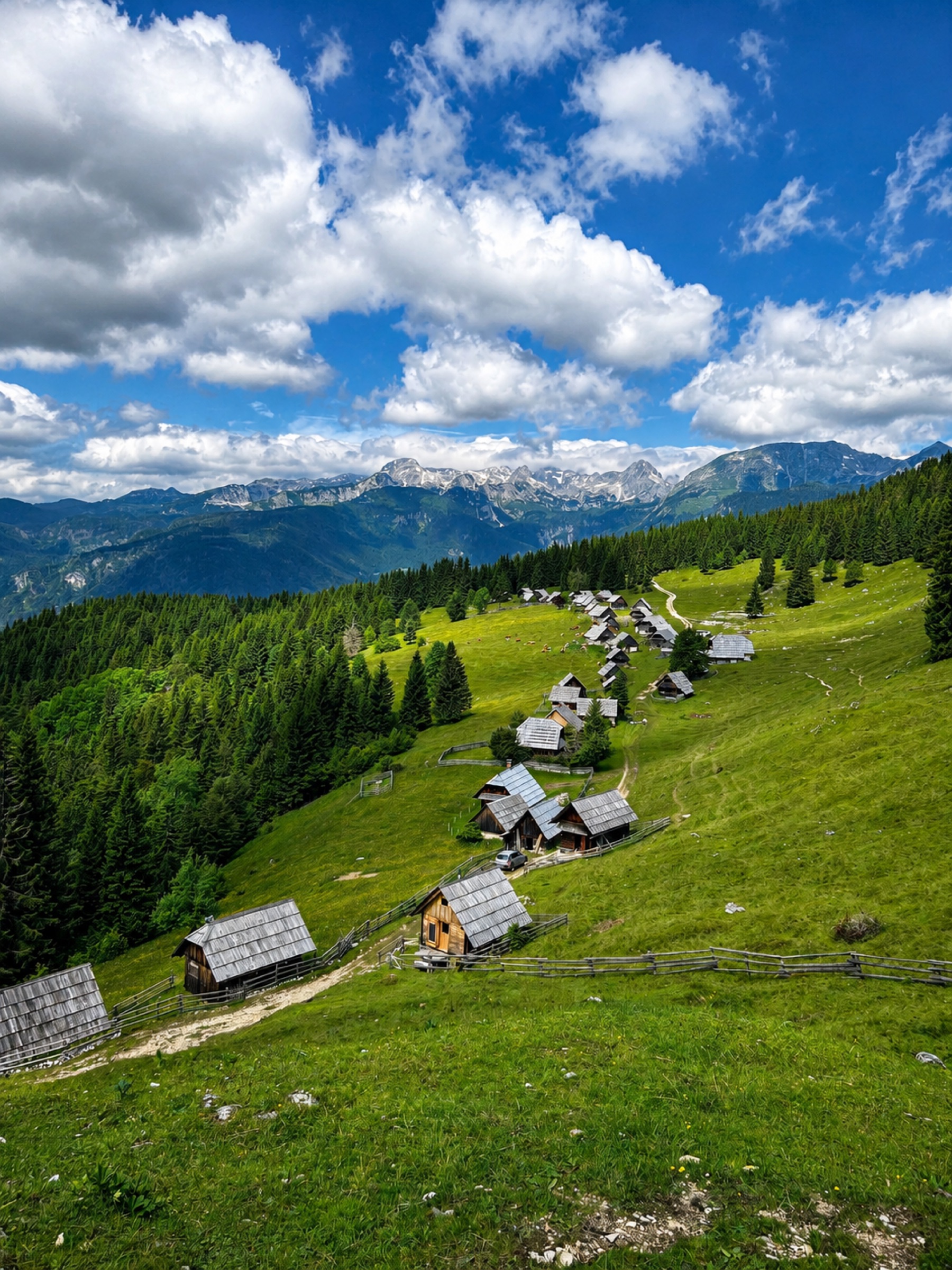
Then the top: forest road through spruce, past the mountain pastures that end up on postcards — Zajamniki, Uskovnica, Zajavornik — with the Julian Alps between the trees.
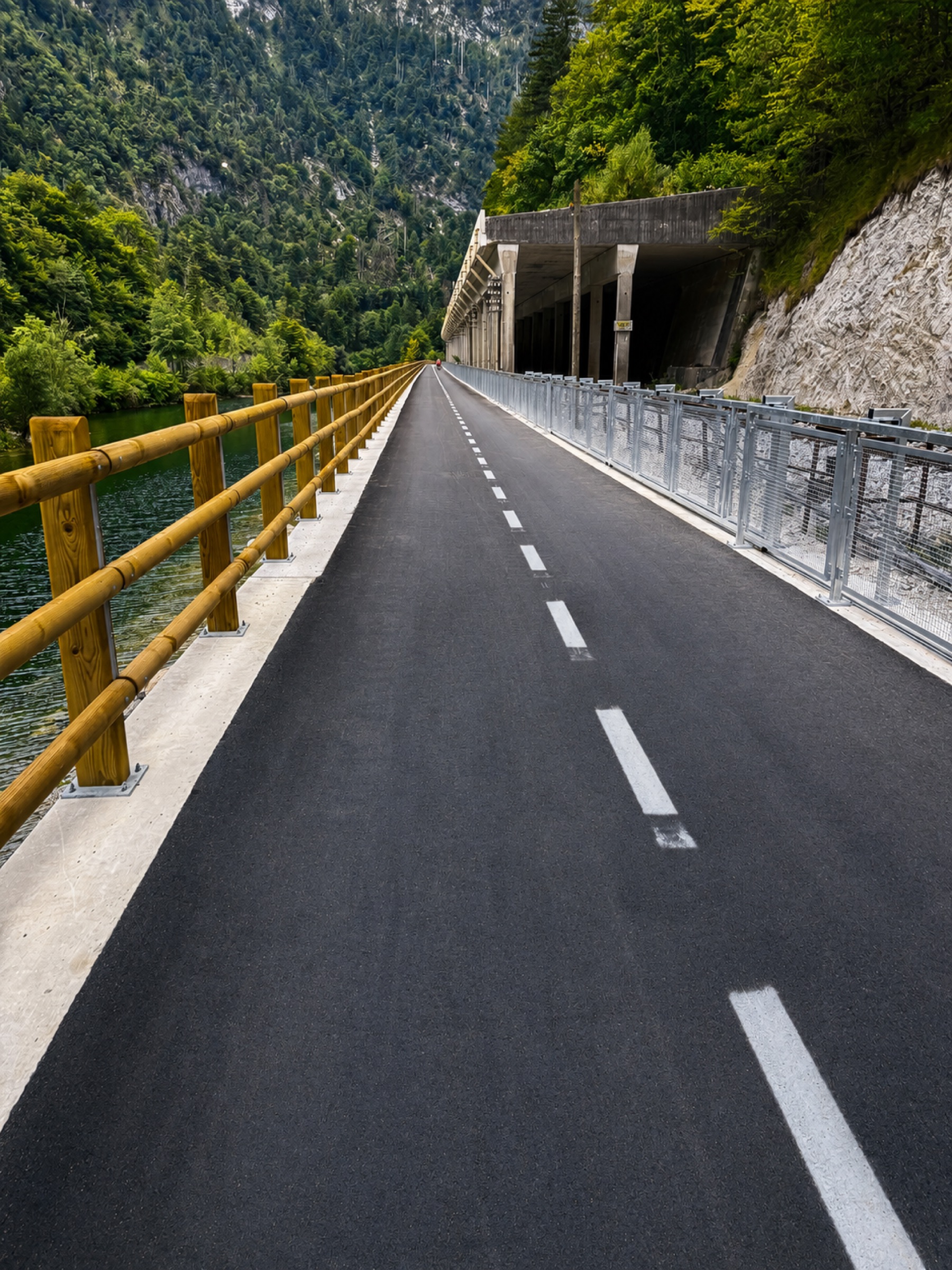
Come down and finish on the new Bled–Bohinj cycle path. It opened in 2026, runs about 28 kilometres separated from traffic along the Sava Bohinjka, and it’s one of the best pieces of cycling infrastructure built in Europe in years.
Day 4 · Jelovica
~75 km · ~1,300 m · majority gravel
The other plateau, across the Lipnica valley. Different forest, different feel. The descents come out near Kropa and Kamna Gorica — two old ironworking villages worth slowing down through.
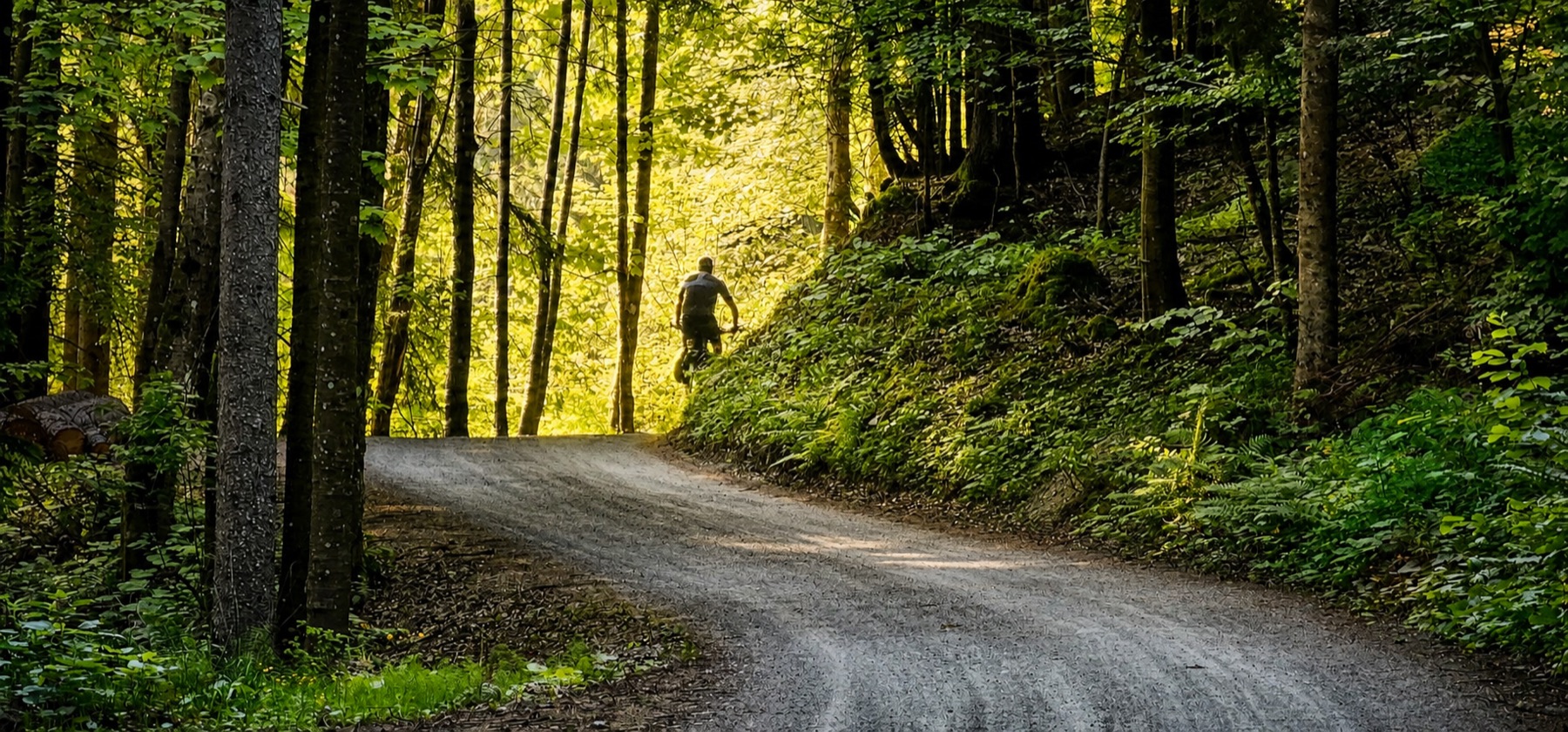
Then home the long way on back roads through Begunje na Gorenjskem and the villages around Radovljica. White roads, no traffic, hills — a Slovenian Strade Bianche, and nobody has told the tour operators.
Day 5 · A stage of the Trans Karavanke
~80 km · ~1,700 m · forest road, finishing in Kranjska Gora
The Trans Karavanke runs 132 kilometres along the Karavanke slopes in four or five stages, largely on forest roads, linking mountain huts. You don’t have to ride all of it to get the good part.
Take the stage that suits the group and finish where the van is. This is the day people talk about afterwards, and nobody else is selling it because almost nobody outside Slovenia knows it exists.
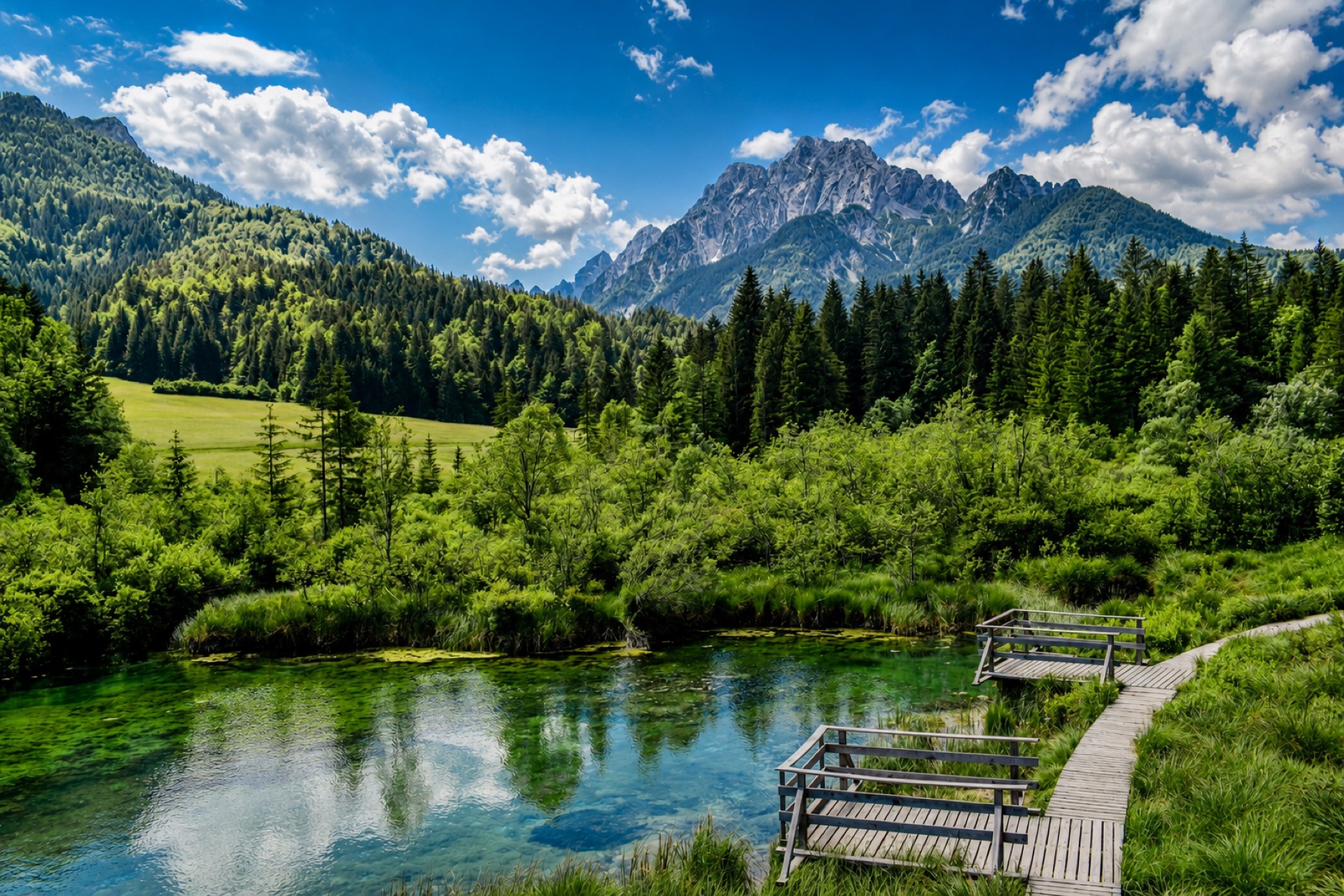
If there’s anything left, keep rolling west. Zelenci is on the way — an emerald spring pool where the Sava Dolinka comes out of the ground, on the edge of Triglav National Park. Then Planica and its ski-flying hills. Then the Italian border and a real espresso in Tarvisio, twenty minutes further on. Three countries’ worth of ideas in an afternoon.
It works as a road week too
Everything above assumes gravel. The valley doesn’t insist on it.
The same base supports a full road week: Vršič from Kranjska Gora, the Pokljuka ascent, the Radovna and Bled loops, and the low country roads east through Begunje for recovery days.
Most groups end up somewhere in between — which is the honest reason to bring a bike that clears 38 mm.
Where you stay
Trivrh, an outdoor hotel in Žirovnica, built out of natural materials and run deliberately small.
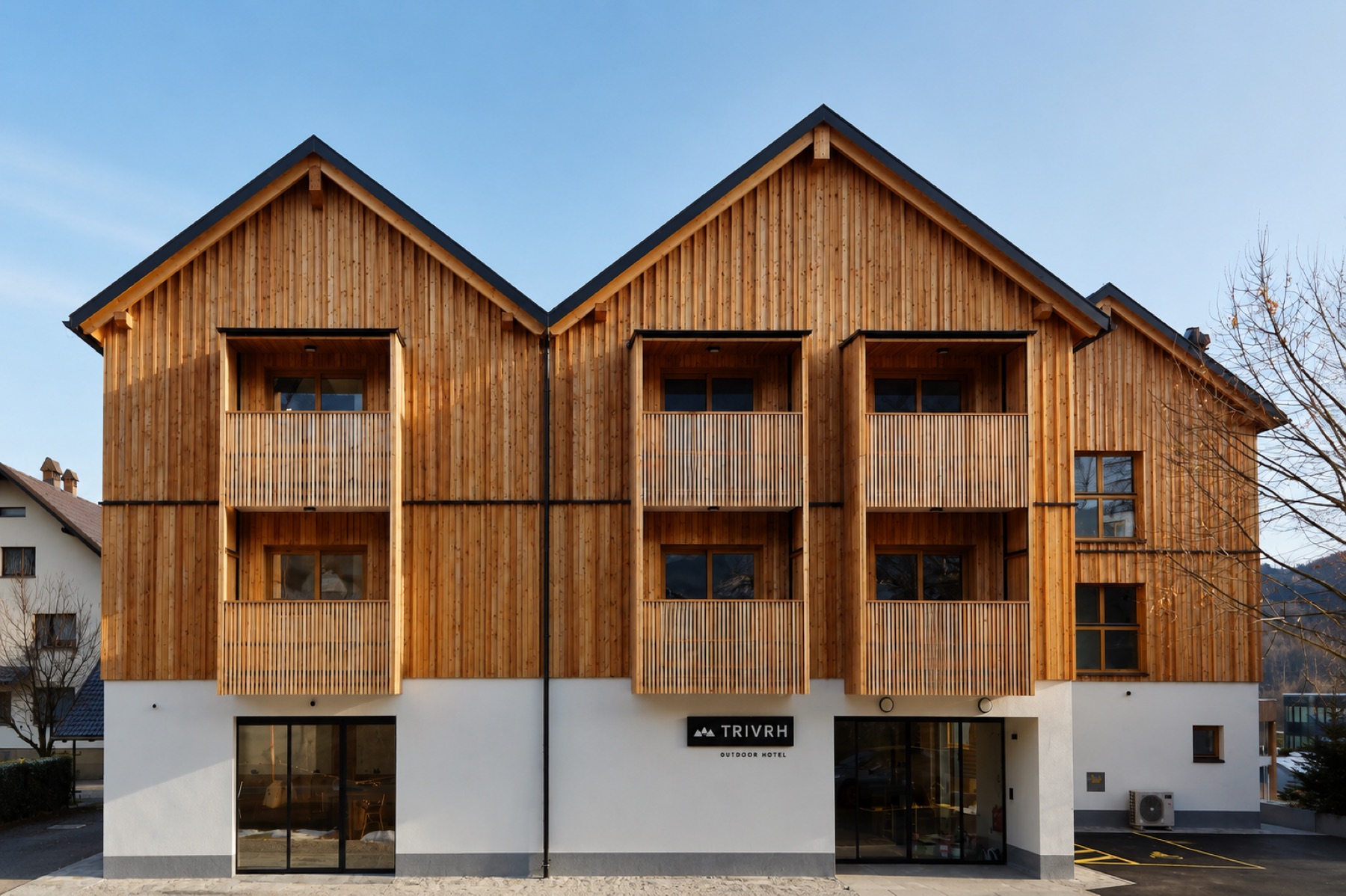
It has the things that actually decide whether a cycling week works: a proper bike room with space for a group’s worth of bikes, wellness for the evening after a long day, breakfast that fits a riding schedule, and a big terrace with the Karavanke on one side and the Julian Alps on the other. Rooms are doubles, triples and quads from 26 to 38 square metres, and there’s a meeting room for twenty if a group wants a route briefing that isn’t held in a car park.
The Karavanke start behind it. Bled and Radovljica are both under ten kilometres away.
Around the door
Žirovnica is villages, not a resort. That’s why it’s quiet, and it means the good things are a short ride away rather than downstairs.
Manu, in Žirovnica, is the one to know. Two restaurants in one: a five-course dinner on one side, a proper Pizza Napoletana or a burger in the lounge on the other. Both good, depending on what kind of day it was.
NOD Bistro Završnica sits by the river at the foot of Day 1, doing local dishes. There’s a new adventure park next to it if anyone still has energy, which they won’t.
Radovljica, 6 km. A medieval square closed to traffic, cafés and restaurants — charming in a way Bled in August is not. Baffi House of Pizza is worth the ride, and Kepca does some of the best ice cream in the country.
Extreme Vital in Radovljica for the bike shop and service. Bajk ER in Jesenice, a short way up the valley, for a local mechanic.
And if anyone wants a short, stupid effort: there’s a 20% ramp by the dam at Moste. Five minutes from the house. Nobody finishes it talking.
Vintgar Gorge is close by for the afternoon somebody doesn’t ride — a wooden walkway pinned to the rock above the Radovna, half an hour from the door, and enough of a walk to feel like you did something.
Vršič, since you’ll ask
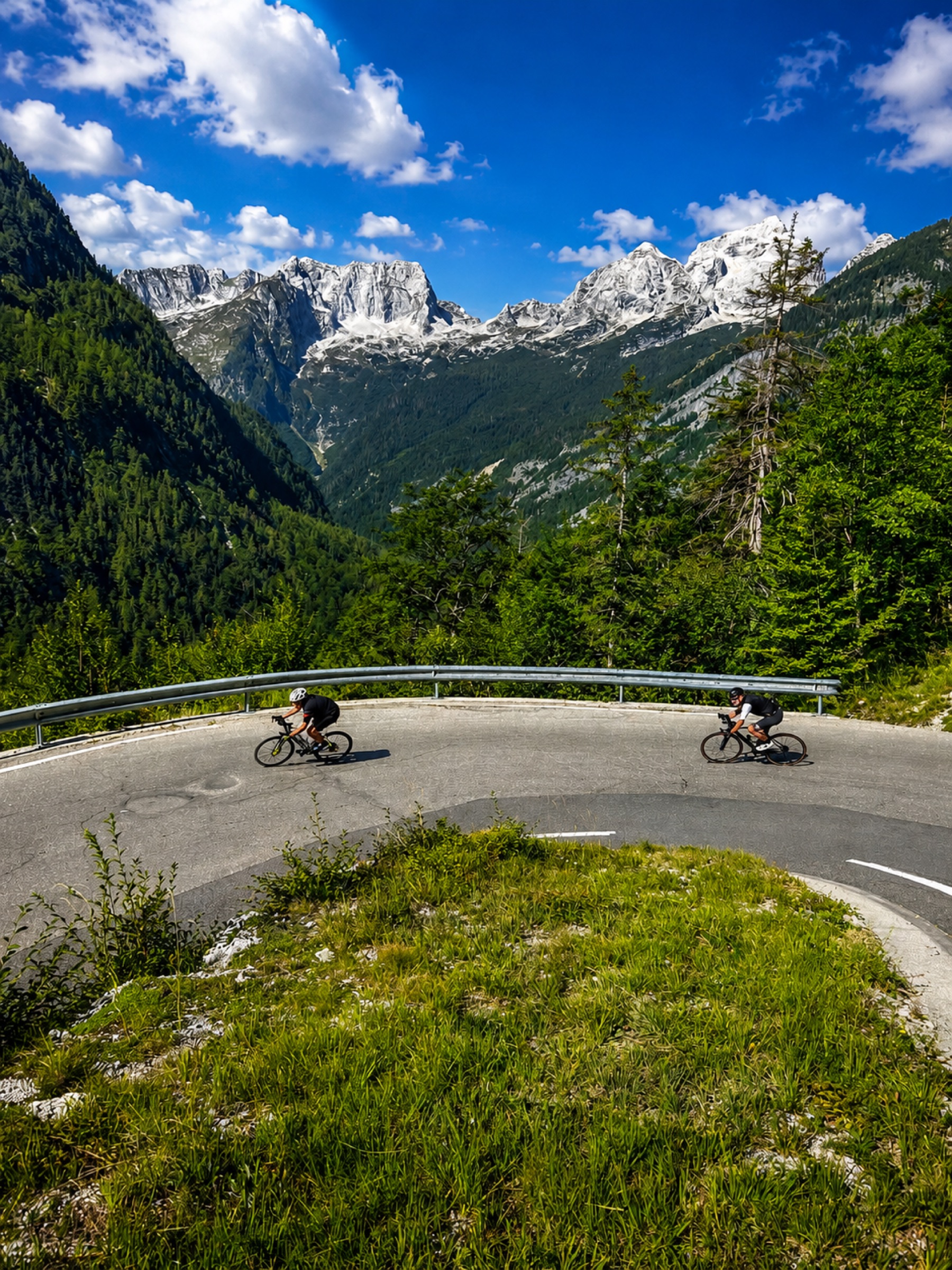
A day from here, and worth it. Eleven point eight kilometres at 6.9% to 1,611 metres — the highest road pass in Slovenia, fifty hairpins across the mountain, cut in 1915 by Russian prisoners of war. The chapel they built stands beside the road and you pass it climbing.
Season: normally open from spring through to December.
One thing worth knowing: a traffic scheme runs on the pass between mid-June and the end of September, with control barriers and restricted summit parking. Crossing by bike is unaffected. If your day involves a support vehicle at the top, tell us early and we’ll plan around it.
Who it doesn’t suit
If you want a town. Žirovnica is a handful of villages. If the group wants to walk out of the hotel into bars, book Bled or Radovljica. That said, a taxi out for the night once or twice is no trouble.
If you want one long traverse. Some weeks should move. If what you want is snow to sea in seven days, don’t base yourself anywhere — ride the country end to end.
We run this as a full week. Five From The Door →
Building a Slovenia trip for your clients? Here’s how we work with tour operators →